Table of Contents
Storage classes tailored to your performance needs
With Rabata, you pay only for the data you actually store or send out of your buckets. No hidden fees or surprises - just straightforward, transparent pricing that lets you keep track and control of your costs.
Rabata’s cloud storage rides on a robust global infrastructure designed to flex with your workload. Whether you’re backing up photos, storing videos, or handling massive files for your business, Rabata offers multiple performance tiers that adapt to what you need. This means you get reliability and speed without overpaying for power when it’s not required.
Oh, and here’s a neat bonus - no extra info or hoops needed to download your data. Rabata keeps access smooth and hassle-free, so when you reach for your files, they’re right there, no questions asked.
Copying and Moving
Copying and moving files might sound straightforward, but it’s a bit more involved, especially when you’re hopping between different storage types, like a local file system and Amazon S3. Rabata handles these operations by carefully copying or moving files and folders from one spot to another, keeping everything neat and in place.
When dealing with directories across different object stores, the process gets trickier. Rabata doesn’t just shove the whole folder at once. Instead, it walks through every file inside the directory, one by one, streaming each file from the source location to the destination. This ensures nothing is missed and that the data stays intact.
This method mirrors the standards set by fsspec, so you get consistency and reliability. Rabata’s approach makes sure your files don’t get lost in translation when moving across different storage systems, while keeping the process smooth and efficient.
See also
- Block storage
- File storage
- Cloud storage
- Clustered file system
- Object access method
How to Access Object Storage with Rabata
Rabata makes accessing Object Storage straightforward and flexible. Whether you prefer a slick web interface, the power of command lines, or coding with APIs, we've got you covered to match your style and the task at hand.
Console Access: Your Browser’s New Best Friend
If you love clicking through a clean, browser-based dashboard, the Rabata Console is your go-to. Just fire up a supported browser, navigate to the Infrastructure Console sign-in page-accessed conveniently from the top menu-and enter your cloud tenant, username, and password. Simple as that, and you’re in.
Keep in mind, Rabata works best with the latest versions of popular browsers. We like to keep things fresh and compatible, so make sure your browser stays within the last three major updates for the smoothest sailing.
| Browser | Supported Versions | Notes |
| Microsoft Edge | Latest three major versions only | None |
| Firefox | Latest three major versions only | Private Browsing mode isn't supported |
| Google Chrome | Latest three major versions only | None |
| Safari | Latest three major versions only | None |
Command Line Interface: Fast, Flexible, Functional
For those who like to keep their hands on the keyboard and avoid the mouse, Rabata’s Command Line Interface (CLI) lets you get things done quickly without writing a single line of code. If you want both speed and full feature access, the CLI is your trusty sidekick. It’s perfect for automation, scripting, and quick adjustments.
REST API: The Playground for Developers
If programming is your jam, then Rabata’s REST API is a treasure trove of functionality. It requires some coding chops but opens the door to full control over your object storage. Whether you’re building custom tools or integrating with other services, the API has what you need.
Rabata supports multiple APIs tailored to different needs:
- Object Storage Service - The core API for everything storage related.
- Amazon S3 Compatibility API - Perfect if you’re familiar with Amazon’s ecosystem and want seamless migration or integration.
- Swift API - Designed for Oracle RMAN users who want efficient backup solutions.
SDKs: Your Ready-Made Toolkit
Not keen on setting up frameworks from scratch? Rabata provides SDKs for various programming languages that handle the heavy lifting of interacting with object storage for you. Think of it as your personal assistant that speaks the language of your code and gets your storage tasks done without fuss. For details, see our guides on SDKs and CLI.
What is an object storage database?
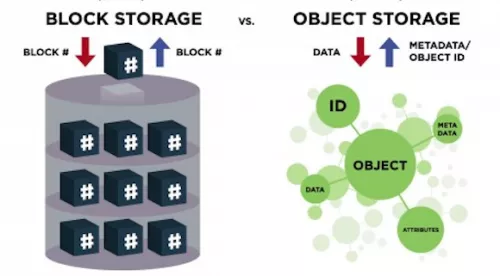
Imagine you have a magic locker where you can toss all your files, and when you need one, you just say its secret code, and it appears. This is basically how object storage works. You use simple API calls to send your files there and get them back when needed. But here’s the catch - the system needs a way to remember where each file is hiding. That’s where the object storage database steps in, acting like a super-smart index that uses metadata - which is like a file’s birth certificate - to find exactly what you're looking for, no matter how vast the storage gets.
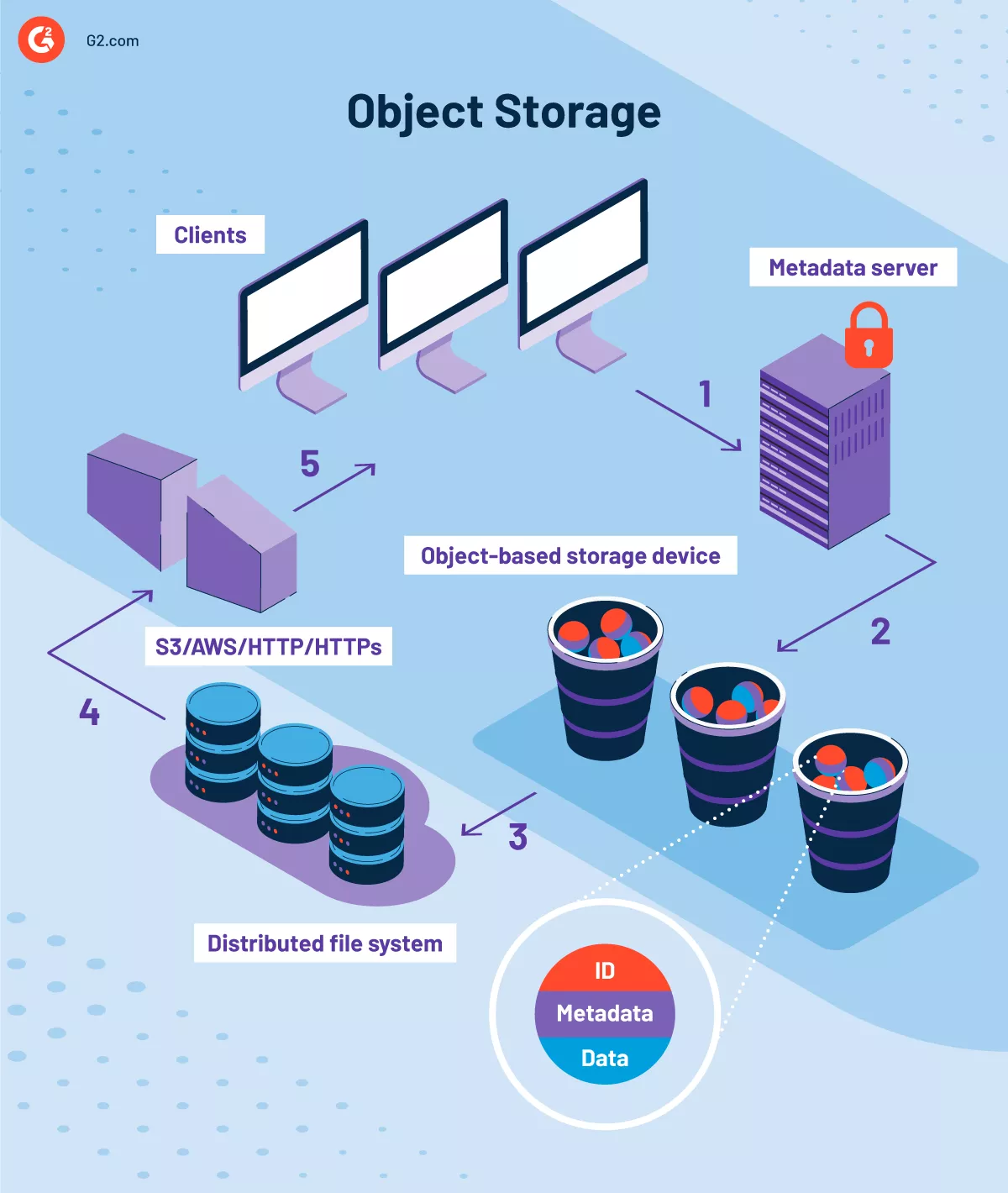
In any object storage system, there’s always a dedicated database that keeps track of everything. This database isn’t just one big heap of data; it’s neatly split into two main tables that work together like a dynamic duo. These are the object directory table, which handles all the little details about each file, and the object storage table, which is the actual warehouse storing your bulky digital treasures.
- Object directory table
- Object storage table
The object directory table
Think of the object directory table as a master librarian who remembers every single detail about the files in the system. It keeps a careful record of the metadata - information like when the file was created, which collection it belongs to, and what it's called. This metadata is crucial because it helps the system organize and quickly locate objects in the massive storage maze. For example, the directory uses three key indexes to keep things running smoothly: the creation time stamp of the object, a collection name identifier combined with that time stamp, and the combination of the object’s name plus its collection ID.
- The object creation time stamp
- The collection name identifier (name ID) and object creation time stamp
- The object name and collection name identifier
The object storage table
Behind the scenes, the object storage table is where the real action happens - it holds the actual data, be it hefty video files, images, or extensive libraries of documents. While the directory table is busy cataloging, this table physically stores your digital belongings. When you upload a file, Rabata’s system doesn’t just stash the file away; it simultaneously crafts and saves the metadata in the directory table, making sure everything stays in sync.
When you want your file back, the application doesn’t blindly search the entire storage pile. Instead, it first queries the object directory table for the metadata, which acts like a precise address in a city full of streets and buildings. Using this descriptive information, it zeroes in on the exact location in the storage table and fetches your data fast - no guesswork involved, just efficient retrieval.
How It Works
Imagine Amazon S3 as a giant warehouse, but instead of shelves, it uses buckets. Each bucket is like a magic container that holds your data. When we say 'object', think of it as a parcel inside that bucket - a file paired with its special label, or metadata, that tells you what’s inside. To get your files into S3, you first create a bucket, give it a unique name, and pick the AWS Region where it will live. Then you upload your objects into that bucket, each tagged with a unique key that helps you find it quickly, no matter how many packages pile up.
Rabata’s cloud storage leverages these buckets and objects with a sprinkle of extra protection. You can turn on versioning, which is like having a time machine for your files. Accidentally deleted or overwritten something? No worries. Just roll back to an earlier copy in the same bucket. And because safety is non-negotiable, your buckets and their precious contents start locked down tight. Only those with permission can peek inside. Rabata uses bucket policies, IAM policies, Access Points, and ACLs to make sure access is handed out like VIP passes. So, you stay in control, while your data stays safe.


Comments